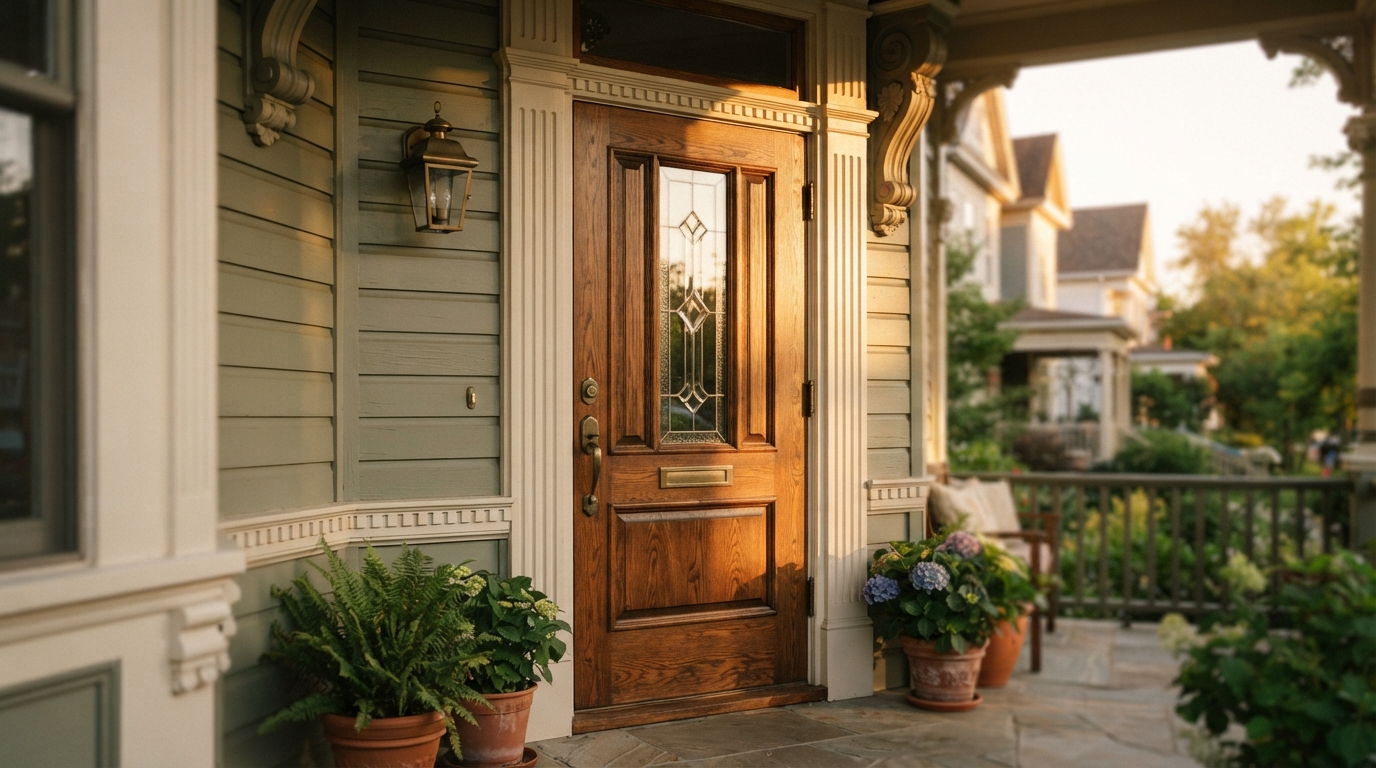
A wood with glass door combines a solid wood frame with one or more glass panels, giving a home natural light and visual depth without giving up the warmth of traditional joinery. For homeowners weighing materials, a wood with glass door offers a middle ground between the insulating qualities of wood and the openness that glass panels bring to an entryway or interior passage.
Many older homes in San Francisco, CA feature narrow hallways and limited natural light, which makes glazed wood doors a practical option for brightening interior spaces without major structural changes. Because wood is a renewable material with natural insulating properties, it remains a common choice for homeowners who want a classic look paired with better thermal performance than some manufactured alternatives.
What Defines a Wood With Glass Door
A wood with glass door is built around a hardwood or engineered wood frame with one or more panes of glass set into the structure. The glass portion, often called the “lite,” can range from a small decorative insert to a full-length panel.
Common configurations include:
- Full-lite doors with a single large glass panel for maximum light
- Half-lite doors that balance privacy with visibility
- Multi-pane grid designs that reference traditional architectural styles
- French-style doors with two glazed panels that open from the center
Glass type matters as much as the wood species. Low-emissivity (Low-E) glass coatings reduce heat transfer through the glass surface, which is relevant for homes exposed to San Francisco’s fog-driven temperature swings between morning and afternoon.
Energy Performance and Local Climate Considerations
Door performance is typically measured using U-factor and Solar Heat Gain Coefficient (SHGC) ratings, both of which are verified through independent testing. According to ENERGY STAR’s federal guidance, certified doors must meet U-factor and SHGC thresholds that vary based on glazing level, meaning a door with more glass area faces stricter insulation standards than a solid door.
For San Francisco, CA properties, this distinction is practical rather than theoretical:
1. Coastal fog and wind create frequent temperature shifts that test seal quality around glazed doors.
2. Older Victorian and Edwardian homes often have single-pane glazing that no longer meets current efficiency expectations.
3. Factory-applied glazing, rather than field glazing, reduces the risk of air or moisture leakage around the glass seat.
Properly sealed wood doors with factory-installed glazing and Low-E coatings are designed to limit drafts and heat loss compared to older single-pane assemblies, though actual performance depends on installation quality and frame condition.
Comparing Door and Glazing Options
|
Feature |
Solid Wood Door |
Wood With Glass Door |
Steel-Framed Glass Door |
|
Natural light |
None |
Moderate to high, depending on lite size |
High |
|
Insulation potential |
High |
Moderate to high with Low-E glass |
Varies by thermal break design |
|
Traditional aesthetic |
Strong |
Strong, with added transparency |
Modern or industrial |
|
Maintenance |
Periodic refinishing |
Periodic refinishing plus glass seal checks |
Lower maintenance frame, glass seal checks |
This comparison is a general guide; the right choice depends on the home’s architectural style, exposure to weather, and how much daylight a given entry or interior opening needs.
Design Guidance for San Francisco Homes
Design consultations for wood doors and windows are available to help homeowners match glazing style, wood species, and hardware to a property’s existing architecture. Based in USA, Portella’s Steel Doors and Windows serves customers across San Francisco, CA, offering project coordination for wood door and window installations without maintaining a local office or showroom in the city.
When planning a glazed wood door project, homeowners typically consider:
- Matching the lite pattern to existing window muntins for visual consistency
- Selecting a wood species suited to coastal humidity levels
- Confirming glazing specifications meet current energy performance expectations
- Coordinating installation timing with other exterior or interior renovation work
Frequently Asked Questions
Does a wood with glass door reduce energy bills? Performance depends on the glass type, sealing, and installation quality; Low-E glazing and proper weatherstripping are factors known to reduce heat transfer, but actual savings vary by home and climate.
Is wood a good material choice for San Francisco’s coastal climate? Wood is naturally insulating and can perform well in coastal climates when properly sealed and maintained, since moisture resistance depends on finish quality and regular upkeep.
Can glass panels be added to an existing solid wood door? Some solid doors can be retrofitted with glass inserts, though this typically requires professional evaluation of the door’s structural integrity and frame depth.
What maintenance does a glazed wood door require? Routine care includes periodic refinishing of the wood surface and checking glass seals and weatherstripping for wear, particularly in humid or fog-prone areas.
Choosing a wood with glass door involves balancing natural light, insulation needs, and the architectural character of a home, particularly in a climate like San Francisco’s where fog and temperature swings test both materials and seals. Reviewing glazing specifications and installation details before committing to a design helps ensure the finished door performs as expected over time.
Current design and installation information for Portella’s Steel Doors and Windows is available for homeowners evaluating wood and glass door options.