Key point:
• Water damage cleanup follows a set sequence: stop the water source, extract standing water, dry structural materials, and sanitize affected areas.
• Materials usually need to be dry within 24 to 48 hours to limit mold growth, according to federal guidance.
• Parkside Restoration Business Listing is based in Bolingbrook, IL, and the service area covers Lombard, IL.
Thorough water damage cleanup means removing standing water, drying out structural materials, and sanitizing surfaces before mold or structural decay sets in. The process follows a defined sequence rather than a single action, since skipping a step often leads to repeat damage later. Connect with the Parkside Restoration Team to discuss water damage cleanup.
A structured Water damage cleanup process typically starts with identifying the water source and stopping further intrusion before any drying equipment comes into play. Technicians then assess which materials can be saved and which need to be removed, since porous materials like drywall and carpet padding behave differently than concrete or tile under prolonged moisture exposure.
How Professionals Approach Standing Water Removal
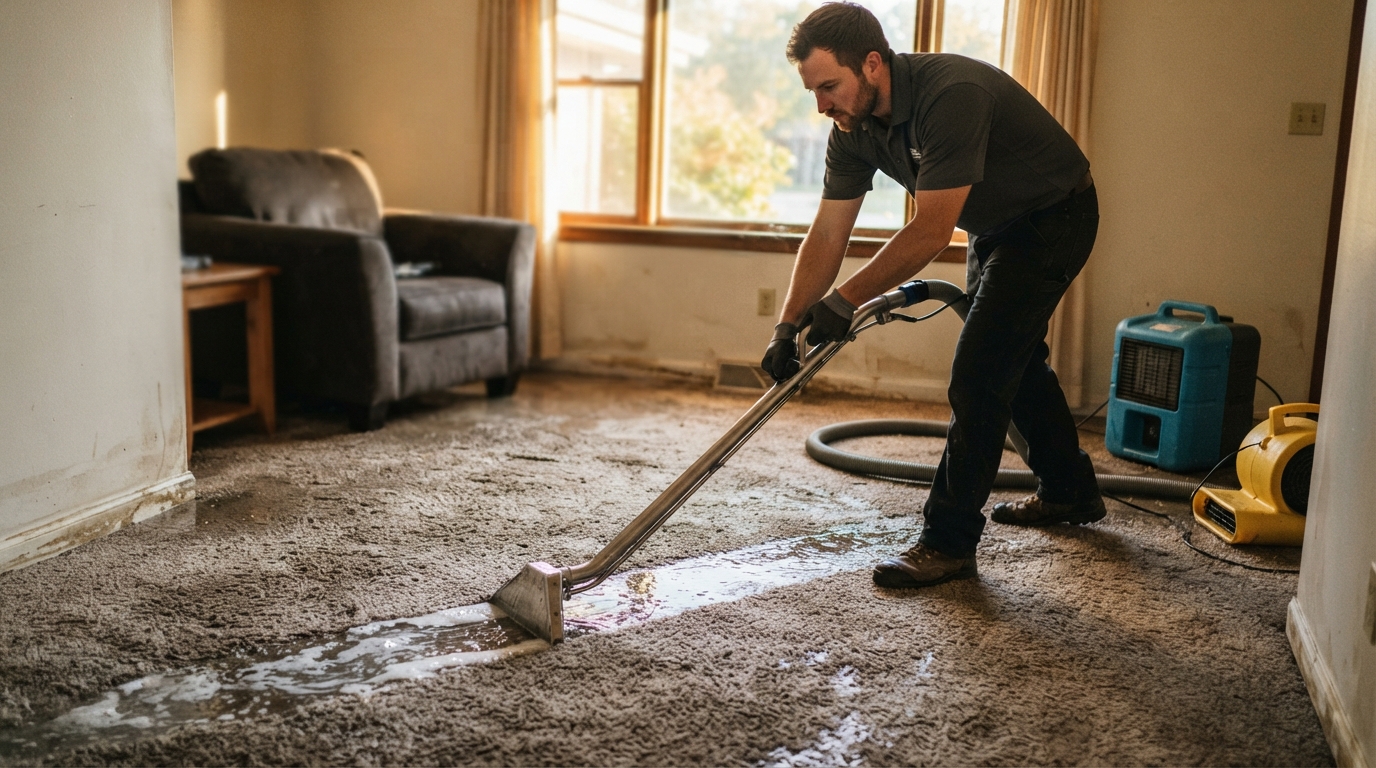
Extraction comes before drying in nearly every water damage scenario, since pumps and wet vacuums clear bulk water faster than air movement alone. Technicians typically follow this order:
• Shut off the water source or divert active leaks
• Remove standing water using pumps or extraction equipment
• Pull up saturated carpet, padding, or flooring that cannot be dried in place
• Check wall cavities and subfloors for trapped moisture using moisture meters
Skipping extraction and moving straight to fans or dehumidifiers often extends drying time and increases the risk of hidden moisture pockets behind walls or under flooring.
Structural Drying and Moisture Monitoring
Federal guidance from the EPA’s mold and moisture guide notes that it is important to dry water-damaged areas and items within 24-48 hours to prevent mold growth. This timeline shapes how restoration crews schedule equipment placement and follow-up visits.
Drying isn’t a one-time setup. Crews generally monitor conditions daily:
| Drying Stage | Typical Focus | Equipment Used |
| Initial extraction | Removing bulk standing water | Pumps, wet vacuums |
| Active drying | Reducing moisture in materials | Air movers, dehumidifiers |
| Monitoring | Confirming materials reach dry standard | Moisture meters, hygrometers |
| Final check | Verifying no trapped moisture remains | Thermal imaging, spot checks |
Materials that stay wet past the 24-48 hour window are more likely to require removal rather than drying in place, since embedded moisture can persist even after surfaces appear dry.
Sanitizing and Addressing Contamination Risk
Water damage from clean sources, such as a burst supply line, carries different risks than water from sewage backups or flooding. Cleanup protocols adjust accordingly:
1. Clean water situations generally allow for drying and sanitizing in place
2. Contaminated water sources often require removal of affected porous materials
3. Antimicrobial treatments are applied to surfaces that remain structurally sound
4. Odor control follows sanitizing once materials are confirmed dry
This distinction matters for homeowners in Lombard, IL, where basement flooding and sump pump failures are common triggers for water intrusion during heavy rain events. Materials that have absorbed contaminated water typically cannot be salvaged regardless of how thoroughly they are dried, since bacteria and residue remain embedded in porous surfaces.
Business Info
Based in Bolingbrook, IL, Parkside Restoration serves Lombard, IL, and other nearby communities, offering water damage cleanup, fire damage restoration, mold remediation, and sewage cleanup services.
Frequently Asked Questions
How quickly does water damage cleanup need to start? Materials typically need to begin drying within 24 to 48 hours of water exposure to limit mold growth, based on EPA guidance for water-damaged buildings.
Can carpet be saved after water damage? Carpet and padding exposed to clean water can sometimes be dried in place if extraction happens quickly, but padding saturated for an extended period or exposed to contaminated water is usually removed.
What is the difference between water extraction and structural drying? Extraction removes bulk standing water using pumps or vacuums, while structural drying uses air movers and dehumidifiers to pull residual moisture out of materials like drywall, subflooring, and framing over several days.
Does homeowners insurance typically cover water damage cleanup? Coverage depends on the policy and the source of the water, since sudden events like burst pipes are often treated differently than gradual leaks or flooding; reviewing policy language or speaking with an adjuster clarifies specific coverage terms.
Looking Ahead
Water damage cleanup works best as a sequence rather than a shortcut: stopping the source, extracting standing water, drying materials within the recommended window, and sanitizing affected surfaces. Readers evaluating local restoration options can Find the Parkside Restoration Business Listing on Google Maps for published contact and service details.