Snapshot:
• A commercial roof inspection evaluates membrane condition, drainage, flashing, and structural wear to catch problems before they cause leaks or interior damage.
• Most commercial roofing systems benefit from at least two scheduled inspections a year, plus checks after major storms.
• Denver, CO building owners face added stress from hail, snow load, and rapid freeze-thaw cycles that accelerate roof wear.
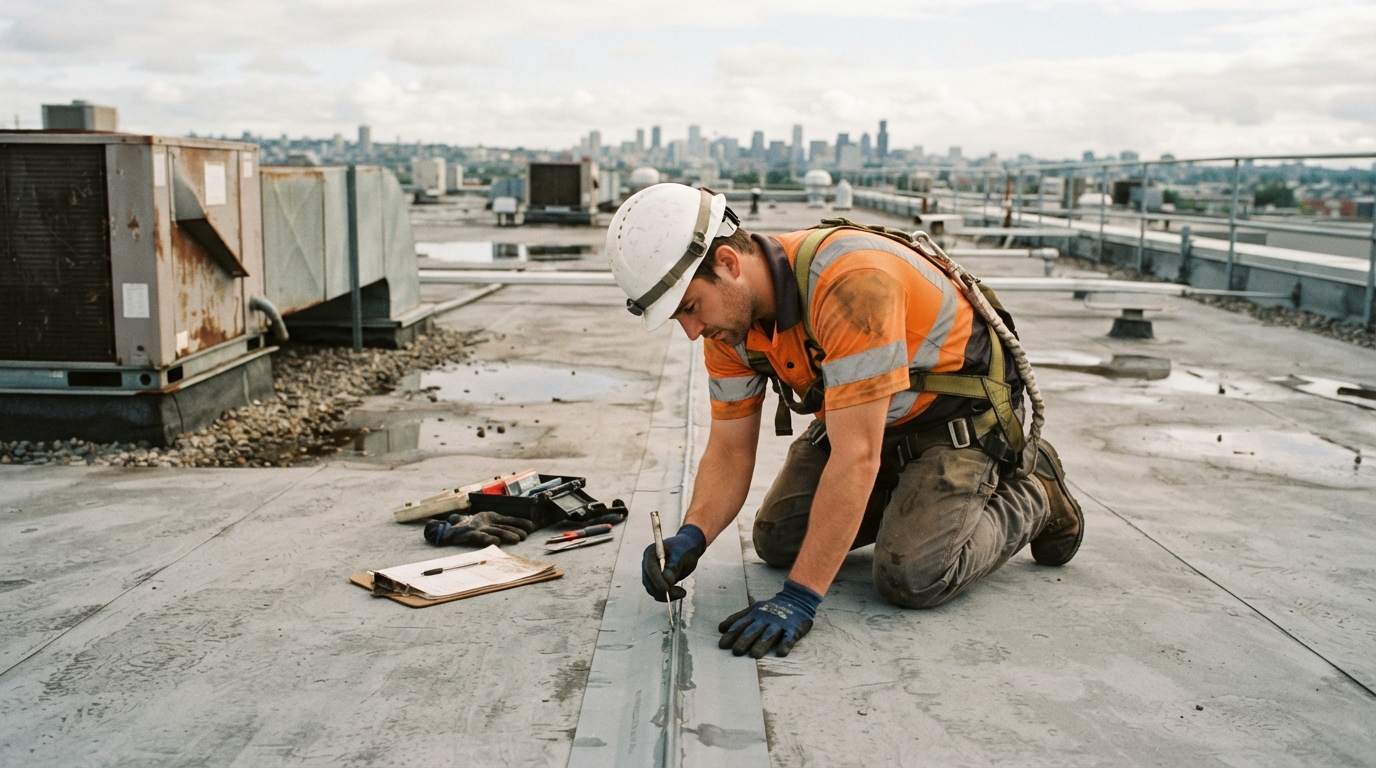
A commercial roof inspection is a structured evaluation of a building’s roofing system, covering the membrane, seams, flashing, drains, and penetrations, to identify damage before it leads to leaks, mold, or structural issues. For property owners, this process is the primary way to confirm a roof is still performing as designed and to budget for repairs before small problems become expensive emergencies.
Routine inspection matters more in commercial settings because flat and low-slope roofs collect water, debris, and ice in ways that pitched residential roofs typically do not. A commercial roof inspection documents the current condition of these systems and creates a record that can support insurance claims, warranty compliance, and long-term maintenance planning. Skipping this step often means problems go unnoticed until they surface as water stains on ceilings or damaged inventory.
Why Denver, CO Properties Face Unique Roofing Stress
Denver, CO sits in a climate zone known for sudden hailstorms, heavy spring snow, and wide daily temperature swings. These conditions put repeated stress on roofing membranes, seams, and flashing points that are not always visible from ground level.
Common issues building owners encounter in this region include:
• Hail bruising or punctures on single-ply membranes
• Ice damming near parapet walls after heavy snowfall
• UV degradation from high-altitude sun exposure
• Ponding water on low-slope sections after rapid snowmelt
The National Weather Service tracks regional storm activity that can help property owners correlate roof damage with specific weather events when filing insurance documentation.
What a Thorough Inspection Typically Covers
A standard commercial roof evaluation moves through several defined stages rather than a single visual pass.
1. Exterior and interior walkthrough – checking for visible membrane tears, blistering, or interior ceiling staining.
2. Drainage assessment – confirming gutters, scuppers, and internal drains move water off the roof without pooling.
3. Flashing and seam review – inspecting transitions around HVAC units, vents, and parapet walls where leaks most often start.
4. Structural and insulation check – looking for soft spots or sagging that may indicate trapped moisture beneath the surface.
Inspection Frequency and Timing Considerations
| Trigger | Recommended Action |
| Routine schedule | Inspect at least twice per year, typically spring and fall |
| After hailstorm or high wind | Schedule an inspection within days of the event |
| Before winter season | Confirm drainage and flashing are sealed ahead of snow load |
| Change in insurance policy | Document roof condition for underwriting or claims purposes |
Waiting until a leak appears inside the building usually means the damage has already spread past the roofing membrane into insulation or structural decking.
Based in USA, roofing contractors serving Denver, CO combine remote and in-region service coverage to reach commercial clients without maintaining a local branch office in every market. Property managers evaluating a contractor for this work should confirm the company documents findings with photos and a written report, since that record becomes useful for warranty claims and future maintenance comparisons. One regional provider working in this space is Roof Evolution, which is listed under commercial roofing installation services for the Denver, CO area.
Frequently Asked Questions
How long does a commercial roof inspection take? Duration depends on roof size and complexity, but most inspections of a single commercial building are completed within a few hours.
Can an inspection be done after a hailstorm even if no leak is visible yet? Yes, hail damage often shows up as granule loss or membrane bruising before any interior leak appears, so a post-storm check is still worthwhile.
Does a roof inspection affect insurance claims? A documented inspection report with photos can support a claim by establishing the roof’s condition close to the date of a storm or weather event.
Is a visual check from the ground sufficient? No, rooftop access is needed to properly examine seams, flashing, and drainage points that are not visible from street level.
Next Steps for Property Owners
Scheduling an inspection before seasonal weather shifts, rather than after a leak appears, remains the more practical approach for most commercial property owners. Current availability details for Roof Evolution are published for the local service area.