Essentially:
- Custom plantation shutters are made-to-measure interior window coverings with adjustable louvers, available in wood, composite, and polyhybrid materials suited to Arizona’s climate.
- Material choice affects durability, insulation, and moisture resistance, which matters for Chandler, AZ homes facing intense summer heat.
- Professional measuring and installation help ensure a precise fit, proper light control, and long-term performance.
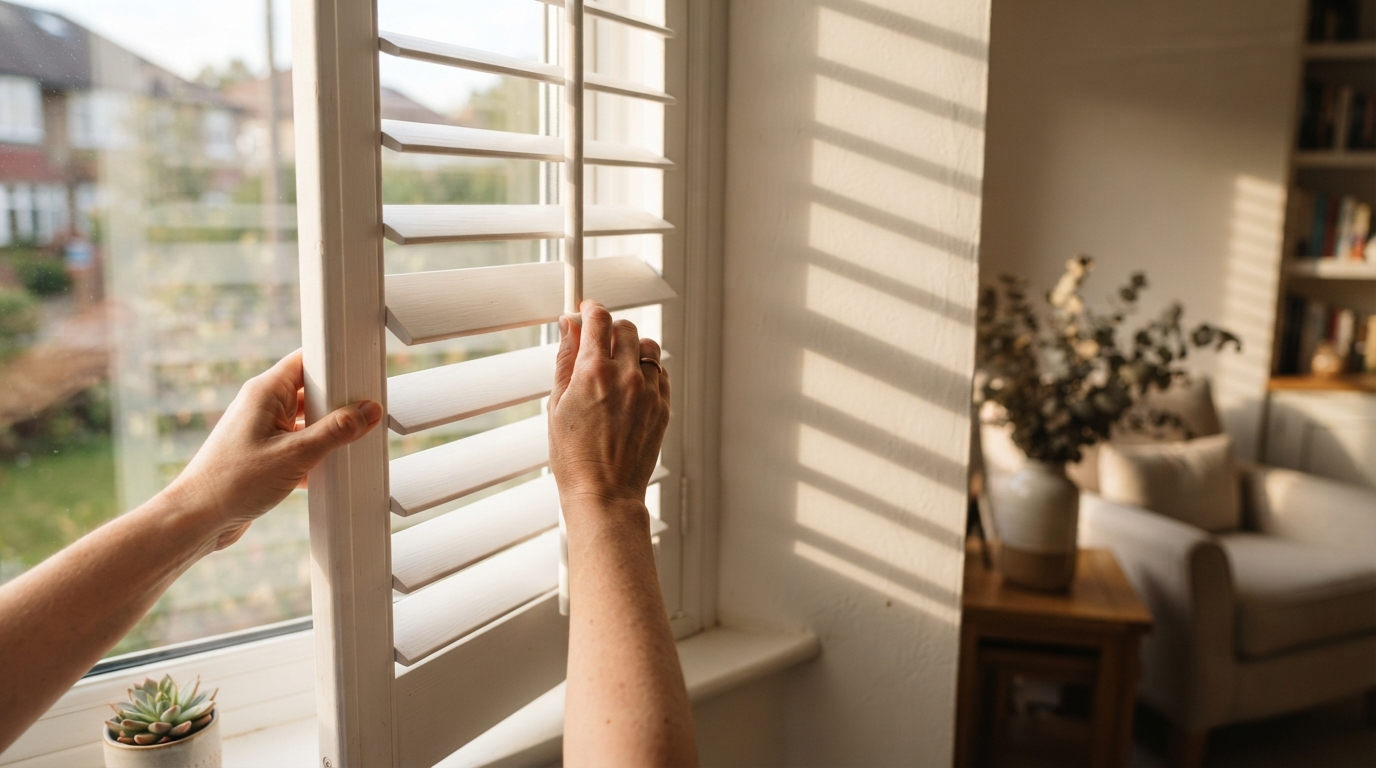
Custom plantation shutters are interior window treatments built to the exact dimensions of a window opening, using adjustable horizontal louvers to control light, privacy, and airflow. Unlike stock blinds, they are fabricated per window, which affects fit, insulation, and long-term durability.
Homeowners researching Custom Plantation Shutters typically want to understand material differences, how sizing and installation work, and what performs best in a hot, dry climate. Arizona Shutter Company, based in Tempe, AZ, works with plantation shutters as part of a broader window treatment lineup that includes blinds and shades.
Material Options and Their Tradeoffs
Shutter materials vary in weight, moisture resistance, and appearance. The three most common categories found in custom installations are:
- Hardwood shutters – natural wood grain and a traditional look, generally used in living rooms and bedrooms rather than high-humidity areas.
- Polyhybrid or composite shutters – engineered materials built to resist warping and fading, often positioned as a durable, cost-effective alternative to solid wood.
- Faux wood shutters – moisture-resistant panels suited to kitchens, bathrooms, and other areas where humidity or temperature swings are a concern.
Material selection should account for window size, room function, and sun exposure, since direct desert sunlight can affect wood finishes over time.
Why Material Choice Matters for Chandler’s Climate
Chandler, AZ summers bring sustained high temperatures, and window treatments play a direct role in how much heat transfers into a home through glass. According to the U.S. Department of Energy, window coverings are one of several strategies homeowners can use alongside efficient windows to reduce heating and cooling costs.
Solid-louver shutters create a physical barrier against the glass when closed, which can reduce solar heat gain during peak afternoon hours. Composite and polyhybrid materials tend to hold up better than natural wood in rooms with frequent temperature swings, since they resist warping under heat stress. For south- and west-facing windows, which take the brunt of Arizona sun, durability and fit matter as much as appearance.
Styles and Louver Configurations
Plantation shutters are generally defined by louver size and panel configuration rather than a single fixed style. Common options include:
| Style Feature | Typical Use | Notes |
| Wide louvers (3.5 to 4.5 inches) | Living rooms, large windows | Maximizes light and view when open |
| Narrow louvers (2.5 inches or less) | Smaller windows, bathrooms | Common in traditional or cottage-style homes |
| Mid-rail panels | Bedrooms, shared-use rooms | Allows top and bottom sections to open independently |
| Full-height panels | Floor-to-ceiling windows | Seamless coverage without a center divider |
Panel configuration also affects operation. Hinged panels suit standard windows, while bifold or bypass tracks are often used for sliding doors or wider openings.
Measuring and Installation Considerations
Because custom shutters are built to a specific opening, accurate measurement is central to the process. Key steps typically include:
- Measuring width and height at multiple points, since window openings are rarely perfectly square.
- Checking frame depth to confirm which mounting method, inside or outside mount, will fit properly.
- Selecting louver size and panel configuration based on the window’s dimensions and intended use.
- Scheduling installation after manufacturing, since custom units are not stocked in standard sizes.
Inside-mount shutters sit within the window frame for a cleaner look, while outside-mount units are attached to the wall surrounding the window, often used when frame depth is too shallow for an inside mount.
Frequently Asked Questions
Do plantation shutters help with energy costs in a hot climate? Closed louvers create a barrier between the window glass and the room, which can reduce heat transfer during high-sun periods, though actual savings depend on window orientation, material, and fit.
What is the difference between wood and composite shutters? Wood offers a natural grain appearance, while composite and polyhybrid materials are engineered to resist warping, fading, and moisture damage, which can matter in rooms with higher humidity or temperature swings.
How long does custom shutter installation take? Timelines vary by order size and manufacturing lead time, since each panel is built to the specific window rather than pulled from stock inventory.
Can plantation shutters be used on sliding doors? Bifold or bypass track systems are commonly used for sliding doors and wider openings, as opposed to standard hinged panels used on smaller windows.
Final Thoughts
Material selection, accurate measurement, and panel configuration all influence how well custom plantation shutters perform in a hot, sun-intensive climate like Chandler, AZ. Comparing louver sizes, mounting methods, and material durability before ordering can help homeowners avoid mismatched fits or materials that underperform in extreme heat.
Current availability details for Arizona Shutter Company are published for the local service area.